
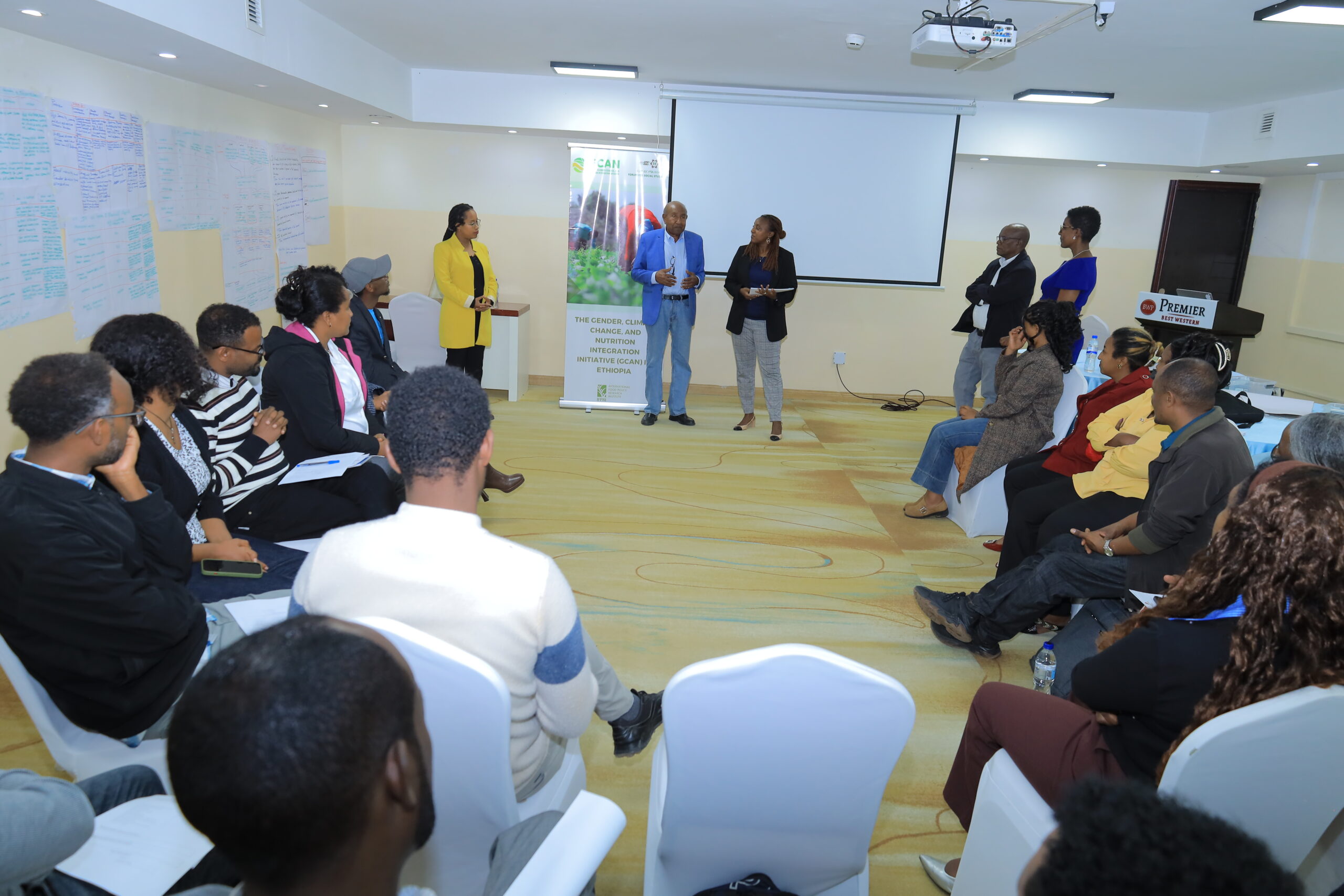
Strengthening the integration of gender, climate change, and nutrition into policy, research, and practice was the focus of a three-day capacity-building training organized by the Forum for Social Studies (FSS) in collaboration with the International Food Policy Research Institute (IFPRI) and WE-Action. Held in Addis Ababa from 19–21 August 2026, the training provided a platform for government, academic, and civil society experts to deepen their understanding of integrated approaches to addressing climate resilience, gender equality, and nutrition outcomes.
The training brought together 19 experts representing government ministries, regional agricultural offices, academia, and civil society organizations. Participants included technical staff from the Ministry of Agriculture and the Ministry of Women and Social Affairs, alongside agricultural experts from Amhara, Oromia, Afar, Somali, Southern Ethiopia, and Sidama regions. Scholars from Addis Ababa University and Kotebe Education University, as well as representatives from non-governmental organizations, also participated, enriching the discussions with diverse perspectives and practical experiences.
The training was delivered by Martha Nemera and Lemma Tesfaye, two senior experts from WE-Action, who facilitated interactive sessions throughout the three-day program. Drawing on their extensive experience in gender, climate change, and nutrition programming, they guided participants through practical exercises, case studies, and group discussions designed to strengthen the application of GCAN approaches within their respective institutions
The program was officially opened by Dr. Selam Esayas, GCAN Project Lead at FSS, who emphasized the importance of embedding gender perspectives into climate change and nutrition initiatives. On the second day, Dr. Tadesse Zerfu from IFPRI observed the sessions and shared a forward-looking message with participants, underscoring GCAN’s objectives and activities while outlining pathways to sustain the initiative.
The final day concluded with a closing address by Dr. Yeraswork Admassie, Director of FSS, who awarded certificates of attendance to all participants. His remarks highlighted the collective responsibility of institutions to translate training into actionable strategies that strengthen resilience, promote gender equality, and enhance food and nutrition security.
By convening diverse stakeholders from across Ethiopia, the GCAN training created a collaborative platform for integrated analysis, policy engagement, and program implementation. The three days of intensive dialogue and learning reaffirmed the commitment of government, academia, and civil society to advance gender-responsive climate and nutrition solutions.