
Training on Gender, Climate Change, and Nutrition (GCAN) Integration
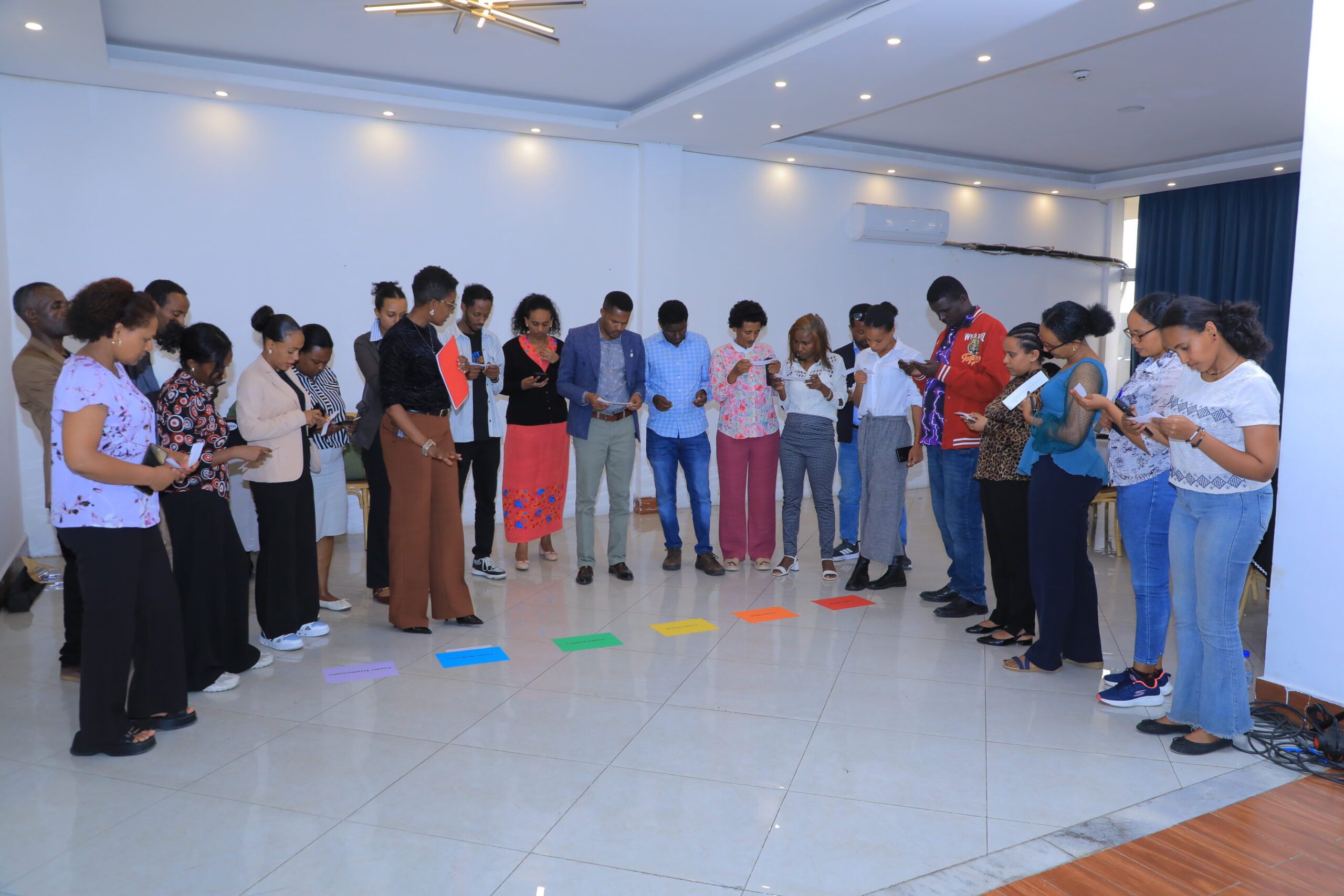
The Forum for Social Studies (FSS), through the Gender, Climate Change, and Nutrition Integration Initiative (GCAN) project implemented in partnership with IFPRI and WE-Action, organized a three-day capacity-strengthening training from April 21–23, 2026, in Addis Ababa. The training brought together 21 participants from government ministries, civil society organizations, academia, research institutions, young climate advocates, and regional Bureaus of Agriculture, reflecting strong cross-sectoral representation of institutions working on gender equality, climate change, and nutrition.
The training was delivered by two senior experts, Martha Nemera and Lemma Tesfaye from WE-Action, and aimed to strengthen participants’ understanding of the interlinkages between gender, climate change, and nutrition, while building their capacity to apply integrated analytical tools to policy and program design.
The training opened with a keynote address from the project lead, followed by participant introductions and an expectations-mapping exercise. Participants highlighted the need for practical analytical tools and stronger research engagement around the GCAN nexus, while also noting concerns related to time limitations and sustaining engagement throughout the training period. Ground rules were collectively established to ensure active participation, respectful dialogue, and collaborative learning. Participants also completed a pre-training assessment to establish a baseline understanding of key concepts and practices related to gender, climate change, and nutrition.
Day One focused on conceptual foundations, including gender analysis, climate change vulnerability and adaptation, and nutrition security. Through interactive exercises, group discussions, and visual learning tools, participants explored gender roles, power relations, and the gendered impacts of resource access. Sessions also introduced key concepts of climate vulnerability and nutrition-sensitive interventions, supported by scenario-based group work. The day concluded with reflections on relevant global and regional policy frameworks.
Day Two emphasized the application of the GCAN nexus framework in policy, strategy, and project design. Participants engaged in marketplace-style peer learning exercises and group work to apply GCAN analytical tools to policy scenarios. Sessions also focused on translating policy objectives into measurable outcomes using integrated planning approaches.
Day Three began with participants reflecting on key lessons from previous sessions and exploring leadership, coordination, and communication roles in advancing integrated programming. This was followed by group presentations focused on policy analysis using the GCAN framework and the development of theory-of-change pathways. Subsequent sessions addressed GCAN implementation and monitoring and evaluation (MEL). Participants also engaged in scenario-based exercises on implementation and monitoring approaches. The training concluded with a post-training assessment to evaluate changes in their knowledge and overall learning outcomes.
Overall, the training strengthened participants’ conceptual understanding of the GCAN nexus and enhanced their capacity to apply integrated analytical tools to support evidence-informed policy development and program implementation across gender, climate change, and nutrition sectors in Ethiopia.
The training concluded with a certificate award ceremony, where certificates of appreciation were presented to all participants by Dr. Selam Esayas, GCAN Ethiopia Project Lead at FSS.